
news/articles/article
Body Position for Off-Road Riding: The Fundamentals That Actually Matter
Watch professional off-road riders from a distance and their body position looks casual, almost lazy. They stand relaxed, the bike moving beneath them while their heads remain level and composed. Observe beginners and you'll see tension everywhere—death grips on handlebars, locked elbows absorbing every impact directly into shoulders, a rigidity that transmits every bump into the spine and exhausts riders long before terrain demands it. The difference isn't strength or fitness; it's understanding which parts of your body should be working and which should remain neutral. Learning proper position is the single most effective investment a new off-road rider can make.
The attack position—the neutral standing stance from which all other movements originate—places your feet on the pegs with balls-of-feet contact, knees slightly flexed, hips hinged forward, elbows up and out, and eyes looking ahead rather than down. Your weight distributes through your legs, not your hands. The handlebars serve for control inputs, not support; you should be able to release your grip entirely without falling forward. If removing your hands would pitch you over the bars, you're too far forward. If it would leave you falling backward, you're too far back. The correct position allows a momentary no-hands test without drama.
Grip the motorcycle with your knees, not your hands. This counterintuitive advice transforms off-road capability once internalised. When your inner thighs clamp against the tank and shrouds, your lower body becomes one with the motorcycle—steering inputs transfer efficiently, and the bike's movements are felt immediately rather than transmitted through rigid arms. Your hands can then hold the bars lightly, adjusting to terrain changes without fighting the bike. The standard test is riding technical terrain while consciously relaxing your grip; if the bike behaves better with relaxed hands (it will), your previous grip was too tight.
Arm position determines how much terrain you can absorb before impacts reach your body. Bent elbows with hands level to or slightly below elbows create maximum suspension travel between bars and torso. Locked elbows—the instinctive response to rough terrain—transmit every impact directly into shoulders, rapidly fatiguing the rider while providing zero cushioning benefit. Consciously dropping your elbows through rough sections increases compliance immediately. The "elbows up" cue addresses this, though thinking of it as "elbows out and bent" more accurately describes the target position.
Africa Twin vs Ténéré 700: The Middleweight Adventure Choice
Dakar 2026: Toby Price Ends KTM's Drought
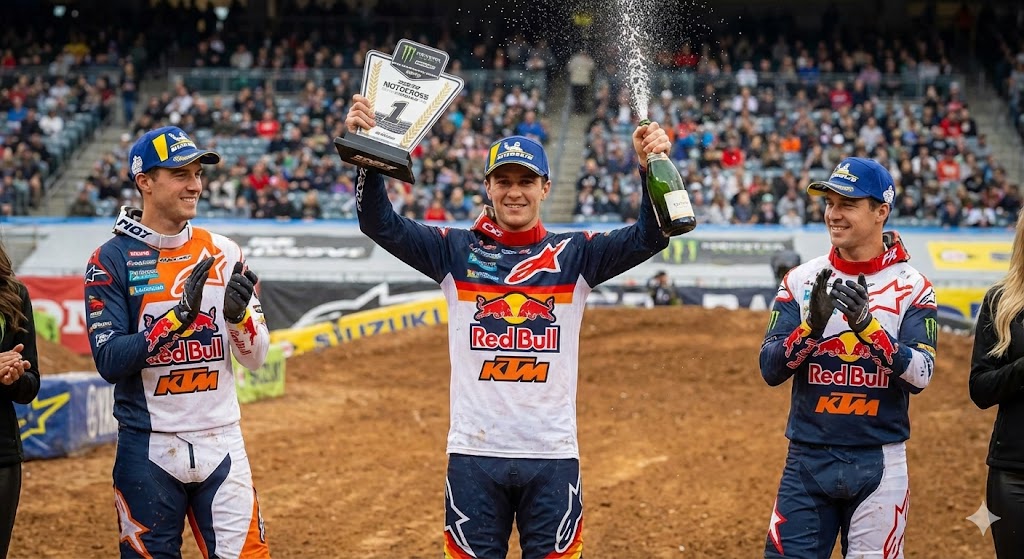
Dakar 2026 Stage One: Sanders Sets Early Pace
Dakar 2026 Stage 1: Brabec Sets Early Marker
Head position influences everything downstream. If your head tracks terrain immediately ahead of the front wheel, your body instinctively prepares for obstacles one at a time—reactive riding that feels hectic and stressful. If your head looks further ahead, scanning for the line through the next several seconds of riding, your body smooths inputs automatically, addressing upcoming terrain before it arrives directly. The simple rule: look where you want to go, not where you currently are. This applies to corners, obstacles, and particularly to hazards you want to avoid—target fixation sends more riders into trees than any mechanical failure.
Weight transfer should be deliberate and exaggerated when learning. Moving your torso forward loads the front wheel for descents, improving grip and reducing the tendency for the rear to overtake. Moving rearward weights the rear wheel for climbs, maximizing traction where power meets dirt. In time, these movements become subtle and automatic—experienced riders shift weight constantly without conscious thought—but beginners benefit from making them obvious and intentional until the pattern embeds itself.
The seated position has its place, primarily in high-speed sections where standing creates wind resistance without proportional benefit, and in corners where sitting allows weighting the outside footpeg while leaning the bike beneath you. But the default should be standing, not sitting. Every off-road school emphasises this because human spines aren't designed to absorb repeated impacts through compressed seated posture. Stand when in doubt, sit when specifically appropriate, and you'll ride longer with less pain than those who reverse the priority.