news/articles/article
Standing vs Sitting: When Each Position Matters
New off-road riders often assume standing is always better, having absorbed the message that proper dirt riding happens from the pegs. This oversimplification causes them to stand in situations where sitting would be more effective, exhausting themselves unnecessarily while actually reducing control. Understanding when each position provides advantage—and why—allows strategic choice rather than rigid adherence to perceived rules.
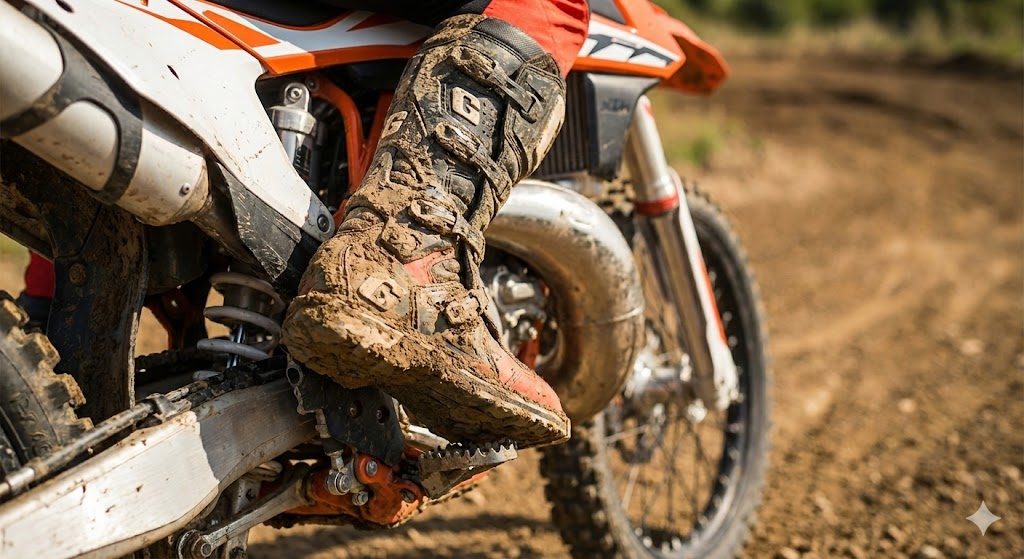
Standing provides two primary advantages: improved visibility and suspension range. From standing position, you can see further ahead, identifying obstacles and line choices earlier. More importantly, your legs become additional suspension travel. Standing with bent knees, you can absorb impacts through leg flex before the motorcycle's suspension is even engaged. This effectively doubles available suspension travel and dramatically improves comfort over rough terrain.
Sitting provides stability advantages that standing cannot match. With your weight on the seat, the motorcycle's center of gravity lowers substantially. Your body connects more directly to the chassis, allowing you to feel traction and chassis behavior more precisely. In corners, sitting enables loading the outside footpeg while leaning the bike, using body weight to increase tire grip. These advantages matter most when traction is predictable and visibility isn't limited.
Rough terrain at speed demands standing. When the bike is pitching and heaving through whoops or corrugations, your legs must absorb that motion to prevent it reaching your spine. Sitting through rough sections is physically punishing and limits your ability to respond to unexpected impacts. Any surface rough enough to unsettle the suspension warrants standing regardless of speed.

Smooth terrain at speed often suits sitting. On well-graded gravel roads or consistent fire trails, standing adds wind resistance, increases fatigue, and raises the center of gravity—all downsides when the terrain doesn't demand standing's advantages. High-speed sections with predictable surfaces are where sitting conserves energy for the technical challenges ahead.
Tight technical sections present the most nuanced choice. Sitting allows finer rear brake modulation through ankle movement rather than whole-leg positioning. Standing provides better visibility of the immediate terrain and allows weight transfers necessary for obstacle clearance. Many skilled riders transition constantly through technical sections, sitting briefly for precise control inputs then standing for visibility and suspension through subsequent obstacles.