
news/articles/article
Steel vs Aluminium Frames: What Actually Matters for Adventure Riding
Aluminium frames dominate modern adventure motorcycle design, and for good reason. The material is lighter than steel, allows complex cast shapes integrating multiple functions into single components, and suits the automated production processes that keep manufacturing costs manageable at scale. BMW's GS, Honda's Africa Twin, Ducati's Multistrada—all employ aluminium beam frames proven across millions of kilometres. Yet a stubborn contingent of manufacturers persists with steel tube construction, and their reasoning extends beyond nostalgic attachment to traditional methods. Understanding what different materials offer in adventure motorcycle applications requires examining how these machines are actually used, not how marketing departments imagine they're used.
The fundamental difference lies in failure modes. Aluminium is stiffer than steel for equivalent weight—precisely why it's favoured for racing where frame flex compromises precise handling. But that stiffness comes with brittleness. When an aluminium frame encounters stress beyond its design threshold, it cracks. Those cracks propagate quickly, and once started, they're essentially unrepairable in the field. A cracked aluminium beam frame in rural Mongolia or central Africa represents a trip-ending catastrophe requiring component replacement or professional welding with specialised equipment rarely available outside major cities. Steel, by contrast, bends before breaking. A steel tube frame subjected to crash damage will deform plastically, absorbing energy while maintaining structural continuity. That bent frame can often be straightened enough to continue riding, and proper repair is possible with equipment available in virtually any town worldwide that has a welder—which is nearly all of them.
Africa Twin vs Ténéré 700: The Middleweight Adventure Choice
Dakar 2026: Toby Price Ends KTM's Drought
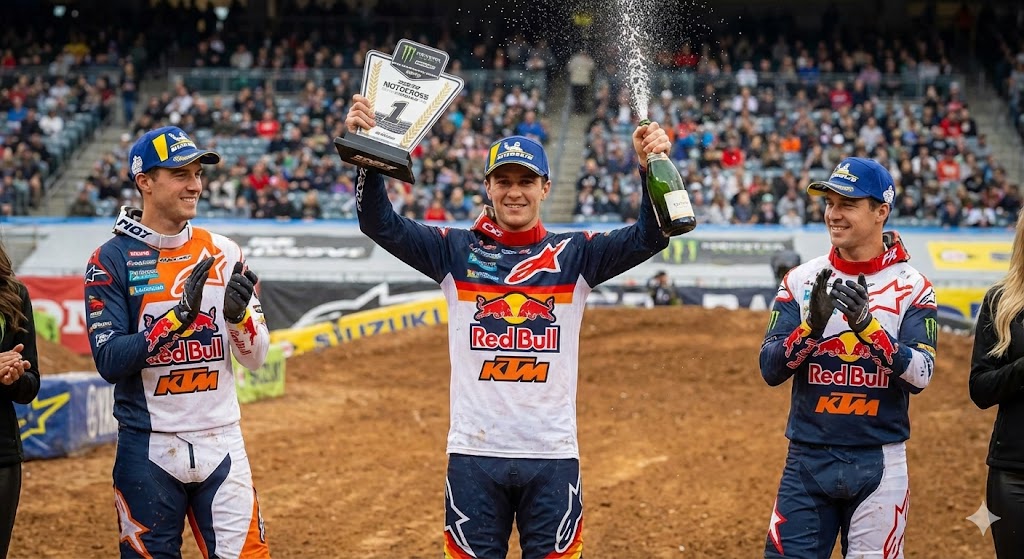
Dakar 2026 Stage One: Sanders Sets Early Pace
Dakar 2026 Stage 1: Brabec Sets Early Marker
Consider where serious adventure riding actually occurs. Not weekend trips to curated gravel roads with mobile coverage and roadside assistance, but places where the nearest proper mechanical facility might be hundreds of kilometres distant, where the local welder learned on agricultural equipment rather than motorcycles, and where parts availability is measured in weeks of international shipping rather than next-day delivery. In these contexts, repairability becomes a primary engineering consideration. The Yamaha Ténéré 700's steel tube frame can be welded by anyone with basic MIG skills. The KTM 890 Adventure's chromoly steel construction offers similar field-repair potential. Try explaining to a village welder that your cracked BMW frame requires TIG welding with specific filler rod in an argon-shielded environment—assuming the crack hasn't already compromised the heat treatment that gives the aluminium its strength.
The weight penalty of steel construction is real but frequently overstated. A well-designed steel tube frame adds perhaps 3-5 kilograms compared to an equivalent aluminium structure. This difference matters in racing where fractions of seconds separate competitors, but adventure touring routinely involves 50+ kilograms of payload and rider weights varying by 30+ kilograms between individuals. Frame material becomes a rounding error in the overall mass equation. Far more weight can be saved—or squandered—through luggage choices, auxiliary fuel capacity, and the accumulated accessories adorning most adventure bikes. The rider agonising over frame material while carrying 15 kilograms of rarely-used tools has missed the larger picture entirely.
Handling characteristics differ meaningfully, though not necessarily in steel's favour for all riders. The additional flex inherent in steel tube construction creates a more forgiving ride quality on rough surfaces—the frame itself acts as supplementary suspension, absorbing high-frequency impacts before they reach the rider. This compliance can feel vague to riders accustomed to the locked-down precision of stiff aluminium chassis, particularly during aggressive cornering on tarmac where chassis rigidity aids confidence. Adventure bikes rarely operate at cornering limits where frame flex becomes problematic, but sportbike riders transitioning to adventure machines often mistake steel's suppleness for imprecision. Given time, most adapt to and eventually appreciate the forgiving nature during long days on deteriorated roads where chassis compliance reduces fatigue.
Corrosion presents steel's genuine weakness. Aluminium forms a self-protecting oxide layer resisting further deterioration, while steel requires active protection through paint, powder coating, or plating. Scratched steel tubes in salty or humid environments will rust unless treated promptly, and frame corrosion hidden beneath engine components can progress unnoticed until structural integrity is compromised. Regular inspection and prompt attention to coating damage is mandatory maintenance for steel-framed motorcycles in corrosive environments—a consideration that simply doesn't exist with aluminium frames.
None of this argues that aluminium frames are wrong or steel is universally superior. Material selection involves trade-offs appropriate to intended use. Riders whose adventures remain within towing distance of civilisation gain nothing from steel's field-repairability and might reasonably prefer aluminium's lower maintenance requirements. But for riders venturing into genuine remote territory—where self-sufficiency determines whether mishaps become anecdotes or emergencies—the humble steel frame offers insurance no amount of electronics can replicate. In a world increasingly convinced technology solves every problem, there's wisdom in materials that bend instead of break.