
news/articles/article
Throttle Control: The Skill Nobody Talks About
Watch a novice rider negotiate a twisty road, then watch an expert cover the same ground. The visible differences—body position, line choice, lean angle—account for only part of what separates them. The invisible difference, the one impossible to observe but defining of skill level, is throttle control: how precisely and smoothly power is applied, maintained, and reduced. This fundamental skill underpins every aspect of motorcycle control yet receives surprisingly little attention in rider training.
The mechanics are simple; the execution is not. Rolling on throttle transfers weight to the rear, compressing the rear suspension and extending the front. Rolling off transfers weight forward, compressing the front and extending the rear. Both movements affect available traction, steering geometry, and chassis attitude. The expert rider manages these weight transfers continuously, using the throttle to balance the motorcycle through corners rather than simply regulating speed. The novice rider makes abrupt inputs that upset chassis balance, each correction creating the need for further correction.
Mid-corner throttle application is where control matters most. From the apex onward, progressive throttle roll-on should continue until the corner exit. This isn't about acceleration—you might be adding only five or ten percent throttle—but about loading the rear tire, stabilizing the suspension, and driving the bike through the turn. Abrupt application breaks traction; abrupt release unsettles the chassis. The target sensation is seamless progression from partial throttle at apex to fuller throttle at exit, with no step-change in engine response.
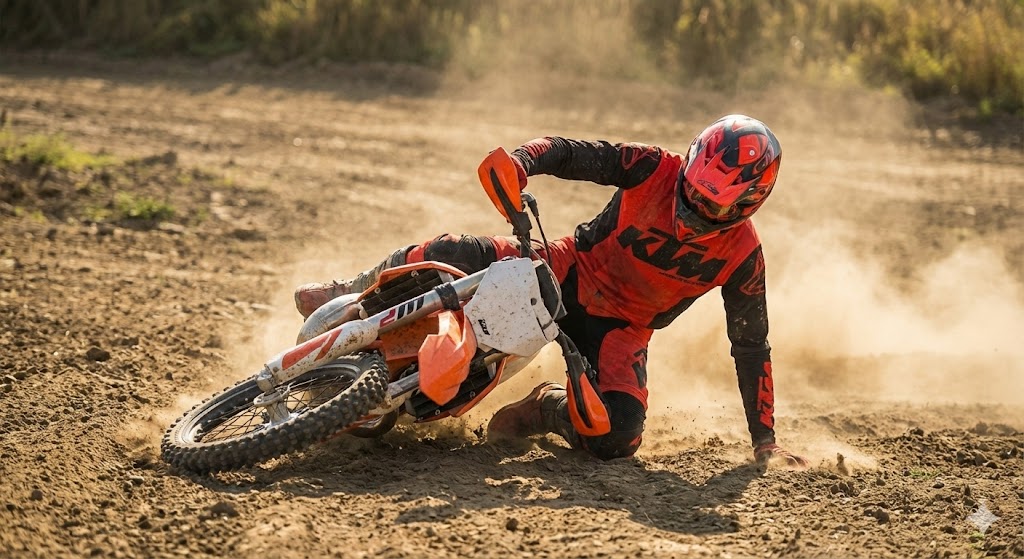
Off-road riding amplifies throttle importance because traction margins are narrower. On loose surfaces, aggressive throttle cracks the rear tire loose; insufficient throttle leaves the bike wallowing and unstable. The correct input depends on surface conditions that change constantly. Reading terrain and adjusting throttle accordingly becomes automatic with experience but demands conscious attention when developing. Trail riding provides excellent throttle training because consequences are immediate and obvious.
The wrist position affects control precision. Many riders hold their wrist at an angle that requires rolling the entire forearm to apply throttle—a coarse input method that makes fine modulation difficult. Position the wrist so the throttle grip aligns with the forearm; now throttle rotation involves only wrist movement, enabling smaller, more precise inputs. This position feels unnatural initially but becomes comfortable with practice, and the improvement in control resolution is immediate.